Zwane, W. (1997). Restoring the Social Fabric. In Recovery, Vol. 2, No. 12.
Wandile Zwane
In Recovery, Vol. 2, No. 12, pp. 6-11, 1997.
Wandile Zwane is a former Project Manager at the Centre for the Study of Violence and Reconciliation.
This is a shortened version of a paper given by Wandile Zwane at a Workshop held in Washington DC, on the Centre's – and his – work in schools.
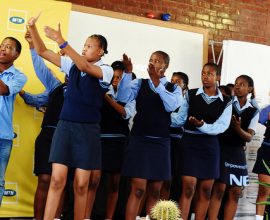
The CSVR's Children and Violence Intervention Programme (CVIP) began in 1994 as a pilot project in four schools in Soweto. Presently, the number of schools served is five in Soweto, two in Tembisa and one in Mohlakeng. In addition, a teacher training programme called the "40 Schools Project", which services both primary and high schools was initiated in 1996.
The primary aim of the project was to reach children and to provide a service that would help to decrease the negative impact of violence. Since its inception, it has grown to include caregivers such as teachers, parents and extended family members.
We have come to realise that for sustained intervention it is necessary to interact with and positively influence all other spheres of a child's life. Treating children in isolation from their support system can be detrimental to our efforts, and to the children themselves, if the environment that is expected to accept them and provide continued support is not prepared or equipped with the necessary skills to deal with and nurture the changes that intervention seeks to achieve in the lives of children.
Hardly any family living in the black townships of South Africa has escaped the traumatic effects of violence in its many forms – political, criminal, familial and structural – either as direct or indirect victims. Structural violence has created barren communities with few, if any, self-sustaining resources. Political violence has swept through the townships, killing thousands of people and destroying homes, personal property and the minimal infrastructure that did exist.
Familial violence has created physically and emotionally chaotic environments where children are not safe or nurtured. For many township children, their homes, which should be safe havens, are often the most dangerous places to be. Even in families that are not violent, parents are often absent because they have to travel long distances to jobs in urban areas, where they work long hours for low wages. Young children are left to take care of themselves in violence-torn communities that do not provide any support services.
Teachers
The majority of teachers today were part of the 1976 student uprising and the 1980s struggle to bring down the apartheid government. In general, these teachers do not feel that they are adequately trained to address the serious trauma their students are facing. If they try to address abuse issues with parents, they are frequently rebuked and their authority to make such interventions is challenged.
They are further overwhelmed by large class sizes and by students who exhibit many trauma-related symptoms. Teachers are also finding that students are not responsive to authority and that they are ill-equipped to deal with discipline problems, other than through the use of corporal punishment.
In addition, a great many teachers have reported stress and trauma of their own to CVIP staff. They are also often the victims of student violence; the status of teachers in the townships is very low.
Parents
Many of the parents of today's students were also involved in the 1976 and 1980s resistance struggle. Thus, many of them have themselves been directly or indirectly affected by violence. Even now, in the post-apartheid era, violence continues to affect them and their children, particularly family violence and violence against women and children.
Finally, the systematic economic inequalities that have been a constant feature of apartheid's structural violence have had a devastating impact on communities as a whole and family units in particular. Township families suffer the effects of very high rates of unemployment, family disruption, domestic violence, and alcohol and drug abuse. Having themselves been victims of violence, they frequently exhibit the behaviour patterns that result from unhealed trauma.
Children
The impact of political violence on today's student population takes a number of forms. Those youth who took part in the anti-apartheid struggle are not today's schoolchildren; most of them are now in their twenties and thirties. However, some are young parents, others are today's teachers and many of them are civil servants. The effects of this group's attitudes and behaviour on the current youth should not be underestimated.
Further, those who are unemployed or who have no sense of belonging – those often referred to as the "militarised youth" or the "lost generation" – also exert an influence on children in school. A significant proportion of criminal activities such as gangsterism, urban violence and drug trafficking, all of which have an adverse impact on schools, can be attributed to this sector of society.
In an attempt to cope with these circumstances, children in the townships often exhibit maladaptive behaviour, including severe depression, suicidal tendencies, alcohol and drug abuse, gang membership, aggressive and violent actions against others, early pregnancy, stealing and other criminal activities.
As children tell their stories during individual or group counselling sessions, and as follow-up interventions are conducted with family members, it becomes clear that these children have been victims of, witnesses to, or are themselves perpetrators of, extreme violence.
The Children and Violence Intervention Programme
In developing a programme that will help foster change and growth in the above conditions, we have always kept in mind the limitations of intervention in isolation from the daily conditions of life in the community. It is often said that one is the product of one's environment. While a person's environment certainly does have an impact on him/her, people are also able to exert an influence on their environment.
In addition, the environment does not have the same impact on each person. In some cases it can lead to resilience and survival, whereas in others it can lead to disintegration or failure. Thus, it is important for us to look at the factors that enable some people to cope with and flourish in the worst environments while others are unable to do so.
At the same time, it is vital to look at which factors inhibit some people, in spite of supportive and nourishing environments, from successfully coping and reaching their full potential.
Problem Areas
During the three years of the CVIP's operation, the symptoms displayed by children who have been referred to our staff for trauma counselling have included: poor concentration, aggression, withdrawal, poor academic performance, truancy, anxiety, startle response, expressions of foreshortened future, chronic lateness, promiscuity, drug and alcohol abuse, sleeping in class and untidiness and unhygienic appearance.
The main problems that the CVIP has been concerned with have been the lack of teacher training on dealing with traumatised children and the lack of violence prevention programmes in schools.
In the past three years, we have developed a seven step process of implementing our programme. This process is not necessarily followed in a linear fashion, as our approach is guided by the dynamics existing in any school or area. It can take up to four months to get the programme functioning in a particular school.
A 16-year-old girl from one of the schools where we work was shot dead while walking home with a friend from school by four young boys, two of whom were her schoolmates, who wanted her earrings. The boy who shot her calmly walked away. The girl later died at the hospital. This happened in spite of the trend prevalent in the township that when an outsider kills or badly hurts a schoolmate, he or she is hunted down by the students of that school. The teachers at this particular school tried to restrain the students and took it upon themselves to apprehend the two schoolmates who were involved, only to see the boys get free bail and return to threaten the key witness. The teachers were unable to prevent the students from burning down the homes of the perpetrators. Had they found the two boys, it is likely that they would have been killed.
Step 1: Entry into Schools
The first two schools selected to pilot the programme were chosen by the staff on the basis of the safety of the areas in which they were placed and the relative existence of a culture of learning and teaching in these schools. Since then, the selection has been based on requests by individual schools.
An awareness of the historical divisions and tensions that exist between teachers, on the one hand, and students on the other, is very important when one works in schools. One should also avoid creating any impression that the programme is being introduced by a particular interest group. Therefore, a process of consultation with the administration, teachers' unions and parent-teacher associations is the first step, leading to a collective decision on whether the services of the CVIP are needed.
Step 2: Needs Assessment
The first phase of the needs assessment focuses on the teachers and assesses their expectations, fears, experiences of violence, and ways of coping in the absence of resources. It is important to start by building a positive and supportive relationship with the staff.
The assessment is conducted by means of an open discussion with the teachers and by administering a questionnaire on their present experiences of violence, the typical incidents of violence that children are exposed to, and the broader environment/community in which they work.
The second phase is conducted with the students (whose classes are randomly selected) to gain an understanding of their concerns, experiences and general interests. In this way we try to understand, through their eyes, the world in which they live.
Step 3: Information Workshop
The workshop is experiential in nature: participants use their personal experiences in order to learn from and teach others, as well as to integrate the theoretical input provided.
The focus of the workshop is on violence and its causes and effects on individuals and the larger community, in particular the school community. Its purpose is threefold. For the majority of people it provides, for the first time, an arena where they can talk about their own experiences, experiences which they have suppressed or denied in order survive or appear strong. Teachers learn to identify symptoms of trauma, both in themselves and in the children they teach. This helps them to begin to develop a deeper sense of self-awareness, with the hope that once this has been done it will be easier for them to recognise symptoms in others. We look at coping skills and how teachers have responded to the challenges presented by traumatised children. This is done because of the high risk of secondary traumatisation that children face. In trying to deal with these challenges, teachers have been known to be harsh with students who have become rebellious or difficult to handle in class. Other problems have been negative labelling and verbal abuse, both used in the hope of changing undesirable behaviour.
Step 4: Establishment of a Coordinating Committee
Once some of the teachers have taken part in the workshop and become sensitive to the various problems posed by trauma symptoms, they elect at least four of their colleagues to form a coordinating committee to oversee the functioning of the CVIP at their school.
This committee is responsible for referring children for services, identifying areas for further training, planning and evaluating future programmes, and receiving intensive training in coping and trauma counselling skills. It works in conjunction with other staff members, who are expected to identify and refer students needing counselling to the committee.
The training of the coordinating committee involves basic communication skills such as handling children's disclosures, networking with other resources and referring cases.
Workshops with Students
The Committee is also expected to identify classes in their school that will benefit from CVIP workshops. The aim is that teachers, who also attend these workshops, will then be able to run workshops for students in other classes, as part of their guidance courses.
These workshops are educational in nature and the emphasis is on articulating what violence is, its effects, the historical root causes of violence in this country, exploring different ways in which violence is displayed, helping students find ways of healing themselves emotionally, such as by articulating their own ideas on what reconciliation means and how to achieve it.
Impact of the Workshops
We believe that the work done by the CVIP has assisted teachers, pupils and parents to deal with their traumatic experiences. It has also gone a long way towards improving relationships between these three groups. Many of the students who approached us for assistance came after they had been through some of our workshops and felt acceptance and the need to confront their past.
A 15-year-old girl was brutally assaulted by her father for not cooking his food on time. His only explanation was that on this particular day he had lost his temper. Children often come to school with severe scars from physical punishment at home. Like many other victims, they often lie about their injuries in order to cover up for their abusers (i.e. the parents).
One topic in particular that has a strong impact is rape. This is the favourite topic among students, particularly male. This is due to the existence of the culture of entitlement that exists among young men – the idea of being rewarded sexually by females for doing certain favours for them or for asserting their authority. Rape, for many of them, is also an instrument that can be used to hurt and control women.
In discussing this issue, male students become very animated in their justifications of why certain women "deserve" to be raped. Many of them have friends who have raped before, just as many of the female students are aware that some of their friends have been raped and have chosen to keep quiet. Little sympathy is expressed by the boys; and the girls are often not vocal about the issue, even when the boys ridicule them.
It is only when we start personalising the issue that boys begin to take stock: they often say that they would kill anyone who ever tried or who did rape their loved ones. This then presents us with an opportunity to deal with the myths surrounding rape and the female students begin to educate the males about the pain and damage that rape victims suffer.
Workshops for Parents
The Committee is also expected to organise a workshop for parents on what child abuse entails in terms of the different types of abuse and neglect. The existence of this structure in the school provides a visible system of support and a valuable resource for the school community. Of vital importance is that this workshop assists with implementing an ethical way of handling children's problems, in particular ensuring confidentiality and privacy.
Step 5: Provision of Counselling Services
Once the coordinating committee has been established and referrals are being made, a CVIP social worker is contracted to the school, initially for one year, spending at least one day a week there. Individual and group counselling services are provided for children, parents and teachers; in severe cases, home visits are made.
For many African people, counselling is not considered as the first option when a child exhibits severe symptoms of trauma. Families usually explore the traditional way, t hat of consulting with healers. The CVIP has to educate both the staff and student population about the benefits of therapeutic intervention.
Even in the first session it is important for us to explore the students' expectations of the service and the benefits they hope to receive from counselling. In some instances, the students seen have been to traditional healers or continue to go. This practice is accepted and respected, never undermined.
It has also become very important for us to involve both parents and teachers in trying to resolve a child's problem. In essence, what this does is create an effective triangle of involvement, building a supportive environment for the child. It also provides us with an opportunity to intervene in the home situation, which is often the environment that gives rise to the problems in the first place and is where the children will return to.
Step 6: Networking with Other Organisations
It is important for a school, through the coordinating committee, to develop a strong networking relationship with various organisations within their community and in other areas. This is necessary in cases where the need for services or intervention is beyond the scope of the CVIP staff.
Step 7: Ongoing CVIP Operation
The vision of the Programme is to facilitate the setting up of structures in schools, consisting of trained teachers, to deal with trauma management. These structures will be able to deal with the problems of children effectively, sensitively and professionally, providing much needed assistance for, and avoiding secondary traumatisation of, victims; but they need support from other professionals in the mental health field.
The coordinating committee is expected to continue providing the services once the CVIP has left the school. However, they actually start providing these services earlier, as the committee members are expected to run the service on the four days of the week when the social worker is not available. Ideally, only the difficult cases are left for the social worker to handle.
Conclusion
In assessing the damage that apartheid policies have inflicted on our people, we realise that a lot of work still needs to be done. In order to restore and rebuild the social fabric necessary for the nurturing of a gentler environment for socialisation, we need to come up with strategies that will mitigate the effects of violence. It is vital that victims and survivors articulate their needs, drawing on their past experiences and cultural coping mechanisms, to ensure that whatever is developed is holistic in its nature and approach.
It has taken us three years to win the trust, confidence and participation of those we serve through our programme. We are learning every day and our approach is shaped by the conditions under which we work and the history of our people. We have devised means of reaching as many people as we can, given our limited person power.
Presently, eight individual schools are helped on a weekly basis, five call upon us if they have severe and serious cases and, through the "40 Schools Project", those teachers whom we have trained call upon us when they have difficult cases.
It is only now that we have begun to lobby the government to support the work we are doing. In this undertaking we are not alone: the community we serve is using its own influence to enable our voice and their voices to be heard.
The response has been positive and there are signs that government sectors are willing to assist us in taking forward the grassroots work we have been engaged in to ensure that as many children as possible have access to our type of services and that teachers are assisted in building supportive environments that facilitate the healing process.
© Centre for the Study of Violence and Reconciliation

CSVR is a multi-disciplinary institute that seeks to understand and prevent violence, heal its effects and build sustainable peace at the community, national and regional levels.